

Why Scribbling Doesn't Need to "Mean" Anything — What 1- to 2-Year-Olds Teach Us About Creativity
The joy of moving your arm is where all creativity begins

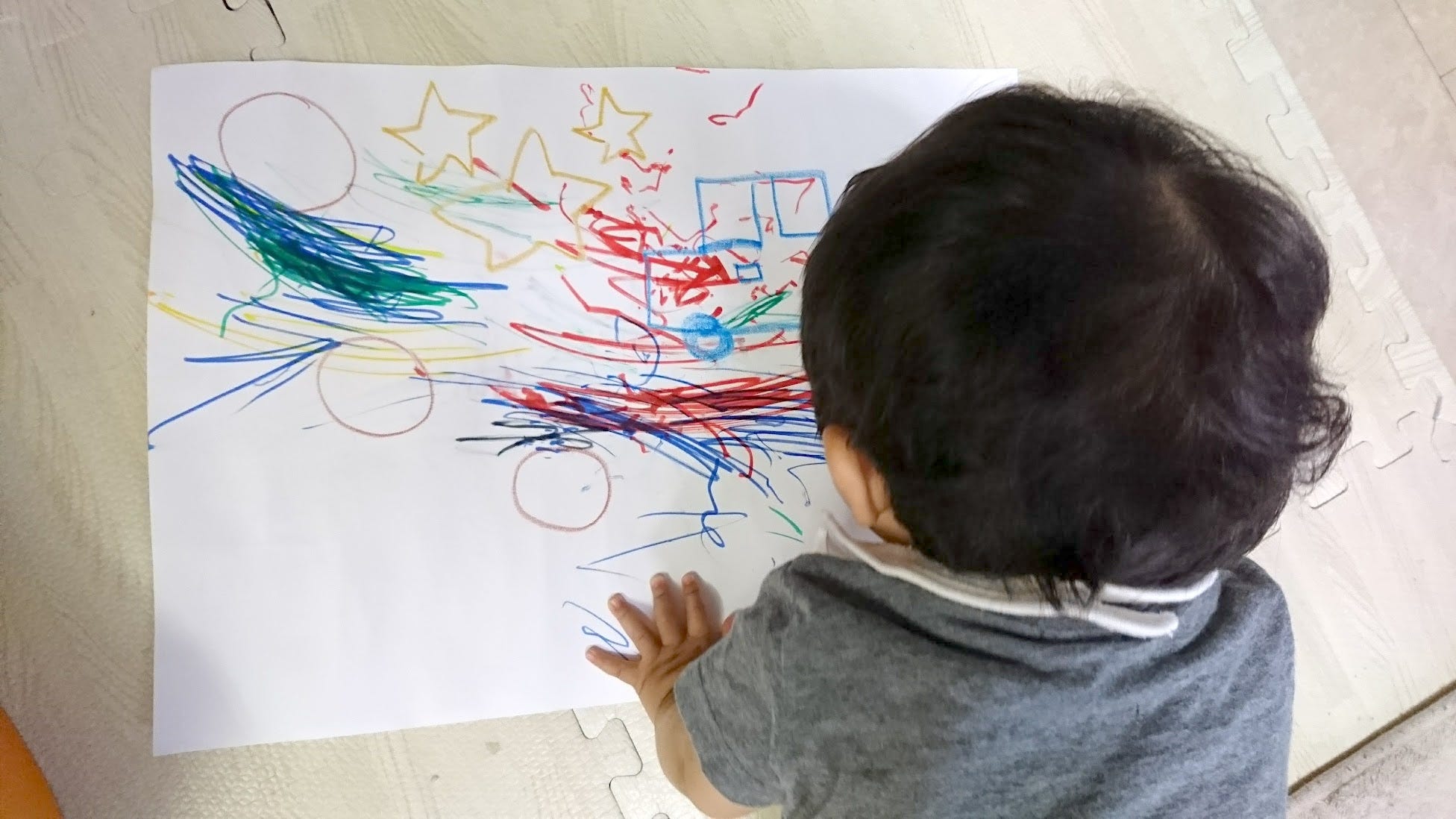
The joy of moving your arm is where all creativity begins a one- or two-year-old grips a crayon and swirls it across the paper. not a circle, not a square, not any recognizable shape — just layers of lines. watching this, it’s natural for a parent to want to ask, “what did you draw?” “what is this a picture of?”
but at this age, a child doesn’t need to be asked for meaning. in fact, not asking for meaning is exactly what makes this stage of creativity so rich.
scribbling isn’t really “drawing” at all
what a child is doing during the scribbling stage isn’t really drawing. they’re enjoying the movement of their own arm, and the fact that it leaves a trace on the paper — the experience itself is the point.
swirl your arm, and a line appears in front of you. noticing that cause and effect is, for a young child, a genuine discovery. they’re confirming, with their whole body, the feeling that when I move, something in the world changes.
so there’s rarely any real intention to draw a specific “something.” if a rounded shape happens to appear, it’s not that they “drew the sun” — it’s simply that their arm happened to move that way.
you don’t need to ask “what is it?”
“what did you draw?” is a completely natural, well-meaning question. but for a child at this stage, it can actually be a hard one to answer.
a child who hasn’t yet reached the stage of “drawing to express something” can get confused, or start searching for whatever answer they think the adult wants to hear, if asked repeatedly about meaning.
what works instead is much simpler:
“you moved your arm so much!”
“you used a lot of red!”
“swirling around is fun, huh?”
instead of asking for meaning, just reflect back, in words, what the child is actually doing. that’s enough. the child picks up something valuable from it — the quiet reassurance that an adult was watching, and saw them.
there’s no need to wait until they’re “old enough”
scribbling usually begins around age one. there’s no need to put off creative activities with thoughts like “they’re still too young” or “maybe once they’re a bit older.” the moment a child shows interest in crayons or art materials is, for that child, the best possible time to start.
being able to hold something, grip a tool, wanting to press it against paper — the moment you notice these small signs of interest, that’s already a real starting line.
at this stage, the only thing that really matters is the environment
during the scribbling stage, there’s surprisingly little an adult actually needs to do. there’s no need to teach technique, and no need to try to get the child to draw “well.” all that matters is preparing an environment where they can move their hands as freely as possible.
set up clothes and a space that are fine to get messy
choose safe materials and a safe environment
pick thick, easy-to-grip crayons
give them plenty of large paper
stay close and watch over them — stepping in only if there’s real danger, but otherwise simply observing
as long as the tools and environment are in place, all that’s left is to watch, at the child’s own pace, as they fully enjoy the pleasure of moving their arm.
a “meaningless” drawing is actually the foundation for everything that comes next
scribbling might look like it isn’t producing anything. but it’s quietly laying the foundation for the developmental stages that follow — the “tadpole figures” (head-with-limbs drawings) and the repeated shapes of what’s called a child’s own visual “schema.”
how to move an arm, how much pressure to use, how to use color — everything a child absorbs, physically, through unhurried time spent scribbling eventually flows into drawings that express something specific.
that’s exactly why there’s no need to rush a child toward “meaningful” drawings at this stage. instead, letting them fully enjoy the simple pleasure of moving their arm, without asking for meaning — that, I think, is the richest kind of support a parent can offer during this time.
🎁 A free gift for you 🎁
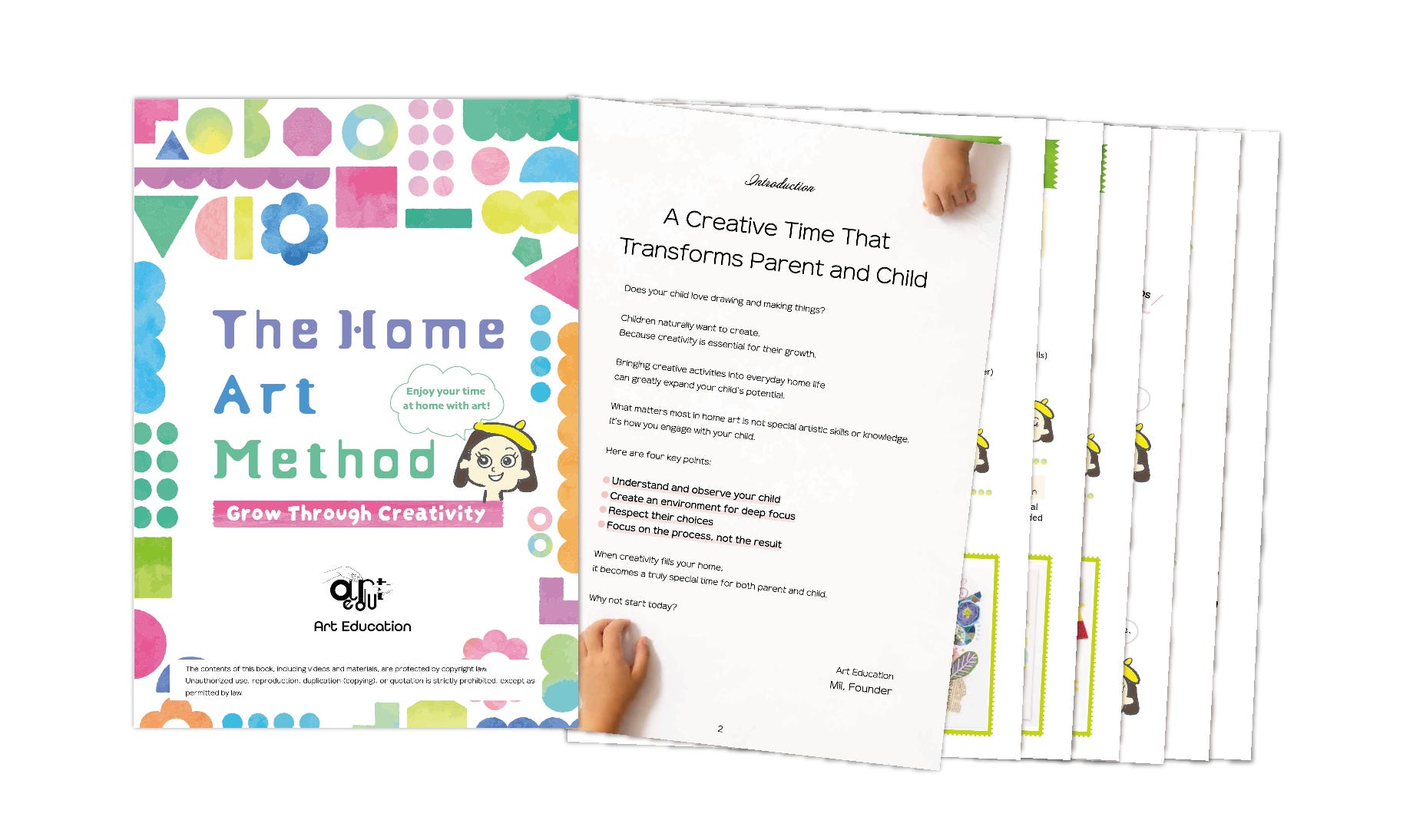
When you subscribe for free, you’ll receive a welcome email with a link to download The Home Art Method, a PDF guide.
Inside, you’ll find simple art activities you can try today, along with four key ideas for engaging with your child. I hope you and your child enjoy it together.
If you haven’t subscribed yet, you can do so using the button below.
Subscribe for free ⬇︎
I share simple, at-home art activities like these on Pinterest and Instagram too — I’d love it if you followed along:
Pinterest: creativekidsartlab
Instagram: @kids.artedu